Storage heaters and Economy 7: how to make them cheaper to run
How storage heaters work, what Economy 7 night rates save you and the settings that stop you running out of heat by the evening.
How storage heaters work
A storage heater has a core of heat-retaining bricks. It charges overnight on cheap Economy 7 electricity and releases the heat during the day. The input dial controls how much it charges; the output (or boost) dial controls how fast it lets the heat out. Modern high heat retention models hold the heat much longer than old ones.
What Economy 7 changes
| Per kWh | 10 kWh a day | A month | |
|---|---|---|---|
| Day rate | about 30p | £3.00 | £90.00 |
| Night rate (7 hours) | about 14p | £1.40 | £42.00 |
| Saving | 53 % | £1.60 | £48.00 |
Economy 7 rates are set by each supplier: around 12.5-14.5p/kWh at night and 28-32p/kWh by day in autumn 2026 (British Gas, EDF and Octopus examples published by British Gas and EnergyPlus). Check your own tariff. Single-rate price cap for comparison: 26.32p/kWh.
Getting the most from storage heaters
- Set the input by the weather: high on cold days, low in mild spells. Turn it down the night before a mild day.
- Keep the output low in the morning and turn it up in the afternoon, so heat is left for the evening.
- Avoid the boost/convector heater during the day: it runs on the expensive day rate.
- On Economy 7, everything else costs more by day: run the washing machine, dishwasher and immersion heater at night.
No storage heaters? Use the cheap hours anyway
On Economy 7 you can still pre-heat with a panel heater or radiator on a timer during the night hours, and use a heated throw in the evening. Without Economy 7, a schedule simply avoids heating empty rooms.
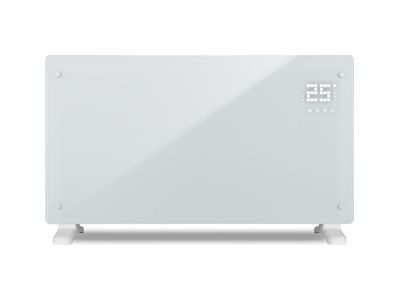
Devola DVPW2500WH Smart Glass Panel Heater 2500W
- Panel heater · 2,500 W
- The 2.5 kW version of the Devola smart glass panel: Wi-Fi app and voice control, a thermostat accurate to about half a degree and a 7-day timer, for living rooms up to about 25–30 m².
- Costs 65.8p an hour at full power.
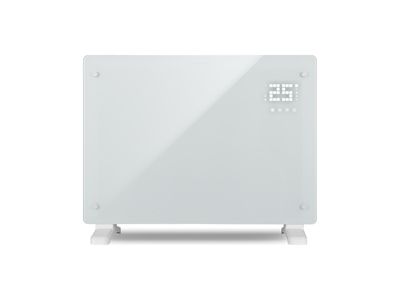
Devola DVPW1500WH Smart Glass Panel Heater 1500W
- Panel heater · 1,500 W
- Wi-Fi glass panel heater, wall-mounted or freestanding, with 7-day programming, thermostat and IP24 splash protection. Heats rooms up to 20 m² only when you need it.
- Costs 39.5p an hour at full power.
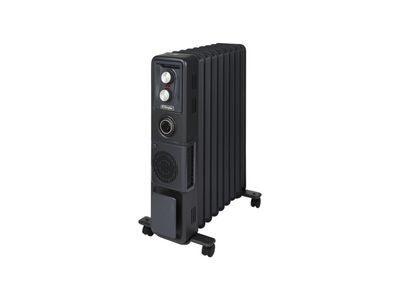
Dimplex ECR24TiFB 2.4kW Oil-Free Radiator with Turbo Fan
- Oil-free radiator · 2,400 W
- Oil-free 2.4 kW column radiator with a turbo fan to warm a big room quickly, three heat settings, thermostat and a 24-hour timer.
- Costs 63.2p an hour at full power.
If you buy through our links, Amazon pays us a small commission. The price is the same for you.
Frequently asked questions
Are storage heaters cheap to run?
They can be, because they charge at the Economy 7 night rate (about 14p/kWh against about 30p by day). Running out of heat and using the day-rate boost is what makes them expensive.
What hours is Economy 7?
Seven hours, usually at night, set by your supplier and meter (often around midnight to 7am, but it varies). Check your bill or ask your supplier.
How should I set my storage heater?
Input according to tomorrow's weather; output low in the morning and higher in the afternoon and evening. Close the output at night if you can.
Is Economy 7 worth it without storage heaters?
Only if you can move a big share of your use to the night hours (storage heaters, immersion heater, an electric car). Otherwise the higher day rate can cost you more than a single-rate tariff.
Running costs use the Ofgem energy price cap, 1 October to 31 December 2026: average unit rate for electricity paid by Direct Debit (26.32p/kWh, standing charge 54.83p/day) and gas (7.97p/kWh). National averages; your region and tariff may differ. Prices on Amazon change: check the live price before you buy.